










May is Motorcycle Awareness Month and National Bike Month—a time dedicated to promoting motorcycle safety, increasing awareness on the road, and celebrating the strong sense of camaraderie among motorcycle enthusiasts across the United States.
National Motorcycle Bike Month is observed every May and brings together riders, safety advocates, dealerships, clubs, and organizations to highlight the importance of safe riding practices. Throughout the month, communities host events and activities designed to engage riders and remind all motorists to stay alert and share the road responsibly.
The roots of National Motorcycle Bike Month date back to the early 1980s, when the Motorcycle Riders Foundation (MRF), a leading advocacy organization for motorcyclists’ rights, began promoting May as Motorcycle Awareness Month. Since then, the movement has continued to grow and is now widely recognized nationwide.
A Focus on Motorcycle Safety
Motorcycle safety remains a central focus of National Motorcycle Bike Month. Educational initiatives such as rider training courses, safety seminars, and awareness campaigns aim to reduce accidents and encourage responsible riding. These efforts emphasize wearing proper protective gear, obeying traffic laws, staying vigilant, and maintaining control in all riding conditions.
At the same time, the month serves as a celebration of motorcycle culture. Group rides, charity events, bike shows, and rallies give riders opportunities to connect, share experiences, and build a strong sense of community.
The Economic Impact of Motorcycling
National Motorcycle Bike Month also highlights the significant economic impact of the motorcycle industry. Motorcycle sales, accessories, parts, repairs, and services contribute billions to the U.S. economy. Many dealerships offer promotions during May, encouraging riders to support local businesses while gearing up for the riding season.
Motorcycle Accident Statistics and Risks
Motorcycle accidents remain a serious concern due to the risk of severe injury or death. According to the National Highway Traffic Safety Administration (NHTSA), nearly 5,000 motorcyclists were killed in U.S. motor vehicle crashes in one of the most recent reporting years, accounting for approximately 14% of all traffic fatalities. Motorcyclists are significantly more vulnerable on the road and are far more likely to suffer fatal injuries compared to passenger vehicle occupants.
Common causes of motorcycle accidents include speeding, alcohol or drug impairment, distracted driving, lack of training or experience, inadequate protective gear, and the actions of other motorists. Safety organizations and government agencies continue working to reduce these risks through education, enforcement, and public awareness.
Top 6 Motorcycle Safety Tips
Motorcycles can be an exhilarating and stylish way to get around, but unfortunately, they can also be incredibly dangerous without the proper training and equipment. Taking a motorcycle cruise through scenic locales like mountains and beachy highways has become a popular way to spend time outside, but without the right safety measures, you could make a fatal misstep. If you want to learn the best ways to stay safe while you’re out on your motorcycle, here are the top six motorcycle safety tips.
1. Get Licensed to Ride
Before you mount your motorcycle, make sure you’re licensed to ride. Taking a motorcycle certification course can get you acquainted with how to ride your motorcycle safely on the road.
2. Get a Motorcycle You’re Comfortable With
Make sure that whatever motorcycle you’re riding, you’re comfortable with. That means taking a few test drives and making sure that the fit of the motorcycle and its size are properly suited to your frame and that you understand where all the controls are.
3. Always Wear Appropriate Safety Gear
This should go without saying, but you need to wear appropriate safety gear when you’re going out on a motorcycle. Get a proper helmet, a full leather jacket, and long protective pants. You may also want some motorcycle boots made of protective material and some sunglasses to keep the sun out of your vision.
4. Follow Traffic Rules
Abiding by all the same traffic rules that other motorists must follow will keep you safe and keep others safe. Don’t put anyone in harm’s way by swerving through traffic or blowing through stop signs and lights.
5. Don’t Ride Under the Influence
Never, under any circumstances, ride your motorcycle under the influence of drugs or alcohol. These can impair your judgment and your riding and could cost you your life.
6. Familiarize Yourself With What to Do If Something Goes Wrong
We don’t like to think about the worst-case scenarios, but sometimes, it’s necessary. Ensure you understand what to do if you are in an accident, including tending to your injuries, recording details of the accident, reporting it to local authorities, and finding proper personal injury lawyers in your area if needed.
Preventing Motorcycle Accidents: Tips for the Road
Motorcycling offers an unmatched sense of freedom, but it also requires constant awareness and caution. Even experienced riders face risks if they neglect safety measures.
Watch Your Speed
Speeding reduces reaction time and increases the severity of accidents. Always ride within speed limits and adjust your speed for road and weather conditions.
Avoid Riding Between Parked Cars and Traffic
Riding between parked vehicles and moving traffic increases the risk of being hit by an opening car door, also known as “dooring,” which can cause serious injuries.
Never Ride Under the Influence
Always ride sober. This includes checking prescription and over-the-counter medications that may impair your ability to operate a motorcycle safely.
Never Share a Lane With a Car
Do not ride alongside a vehicle in the same lane. Always position yourself either in front of or behind other vehicles to maintain visibility and control.
Motorcycle Safety Information for Riders and Motorists
Before heading out, riders should ensure they are road-ready. Wearing a helmet, staying alert, and riding free from alcohol or drugs are critical steps toward safety. Visibility is also essential—use reflective gear, keep lights on, and ride defensively.
Motorists play an equally important role in preventing accidents. Motorcycles and bicycles are often harder to see, so drivers should remain alert, check blind spots, use turn signals, obey traffic laws, and avoid distractions like cell phones.
Whether you are driving a car or riding a motorcycle or bicycle, the goal is the same: enjoy the ride and make it home safely—not just in May, but all year long.
MOTORCYCLE ROAD TRIP PACK LIST
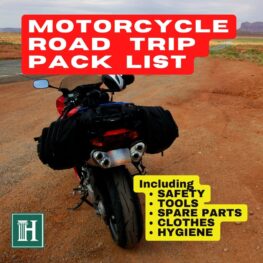
With summer around the corner, a motorcycle road trip looks like a better idea every day. While that sounds exciting, creating a list of what items are necessary to bring can be a lot. Luckily, we have compiled a list for you to go over before your next motorcycle road trip.
SAFETY FIRST
Before any ride, make sure to bring your helmet. Wearing a helmet while riding is critical to protecting your safety and preventing a serious injury on the road. If you plan to buy a helmet, choose a breathable and comfy one to keep it on while traveling. If you are not buying a new helmet, check it for any cracks and confirm that you can easily see through the visor. Replace the helmet if there are any cracks. Even if the crack seems only superficial, it can cause real damage to the helmet and jeopardize your safety.
Flashlights, batteries, spare keys, and multi-tool or pocket are useful for many situations while traveling. Similarly, you should bring water, filling snacks, and a first aid kit to keep yourself safe during your trip. Other small items that can help improve a road trip are duct tape, portable chargers, a backpack, and Tylenol or other painkillers.
TOOLS AND SPARE PARTS
Next, pack tools and spare parts for your bike. You do not need to pack everything, but you should bring the essentials to keep yourself from having to find them on a road trip with no friends or family nearby. The tool kit should be compact. A small bag or pouch with a wrench and socket set, allen wrenches, screwdrivers, pliers, and cable ties cover the basic needs in an emergency. Spare parts like spark plugs, wires, light bulbs, and fuses are easy to carry and replace if ever needed while on the road.
CLOTHES AND HYGIENE ITEMS
Finally, pack spare clothes and hygiene items for the road trip. Before leaving, check the weather where you are headed and pack accordingly. If you are traveling far, it is best to pack for every type of weather to avoid riding with the wrong clothing on. Rain clothes, gloves, boots, and other waterproof clothing are critical to keeping the ride dry and fun. If you will be on the road a lot, pack plenty of socks and underwear to stay comfortable. People will not notice if you repeat outfits, but you will notice not changing your socks or underwear. For hygiene items, get the travel size or transfer your home items into smaller containers to keep things light.
Avoiding Cold Weather Motorcycle Issues
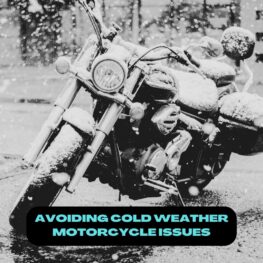
Freezing temperatures slowly decrease battery voltage over time, leading to a difficult time trying to start the motorcycle. Extended freezes also make the oil in a motorcycle’s engine thicken up, meaning the engine needs more battery power to start. These issues explain why starting your motorcycle may be more difficult in cold weather.
Fortunately, we got you covered! First, use a multimeter and ensure the battery has at least 12.2 volts. If the battery is too low, you must let it charge for a few hours so the bike may start.
Next, heat the engine. Place a portable heater near the engine so that the oil inside the engine can warm. When placing the portable heater, ensure it is not touching anything or too close to a flammable item. Oil in cold temperatures thickens and requires more energy from the battery to start. Heating the oil means the engine requires less battery power to start since the oil is more fluid.
If the motorcycle is still not starting, make sure the choke is on. You may have turned off the choke to prevent gas leaks and forgot to turn it back on before trying to start the motorcycle.
CONTACT HERRMAN & HERRMAN IF YOU HAVE BEEN INJURED IN ANY OF THE FOLLOWING TYPES OF ACCIDENTS:
We can help you if you have been harmed by the following:
- Car accidents – Our lawyers have extensive experience handling car accident cases. We will work to identify the party or parties at fault for the crash and build a case to demonstrate persuasively how the parties caused the accident and your injuries. We will seek fair and full compensation through a negotiated settlement or at trial if necessary.
- Truck accidents – Thousands of large commercial trucks travel the roads of Texas every single day. Unfortunately, careless truck drivers and trucking companies disregarding safety put innocent people at risk of serious injuries. If you’ve been injured in a truck accident, let our experienced Texas personal injury lawyers stand up to the trucking companies and insurers on your behalf.
- Motorcycle accidents – Motorcycle riders often suffer grievous injuries in crashes caused by other motorists. Too many motorcycle accidents in Corpus Christi are caused by careless drivers who don’t look for motorcycle riders or violate their right of way. Our personal injury lawyers will work to cut through the bias and stigma against motorcycle riders. Our goal is to seek the financial compensation that you’ll need to recover from a serious motorcycle accident and injuries such as bone fractures, road rash, or traumatic brain injury.
- Product liability – Product manufacturers have a legal obligation to make products that are safe for their intended uses and to warn consumers of any risks that may come with the product. When products have design or manufacturing defects or undisclosed dangers, the product manufacturer may be legally responsible for injuries suffered by consumers. Our attorneys can help you evaluate whether you have a valid product liability claim.
- Brain injury – Brain injuries can leave accident victims with disabilities that leave them unable to work or perform many tasks of daily living. Seeking compensation for a brain injury in an accident often proves incredibly complex. The brain injury survivor may seek compensation for anticipated future medical care and the medical care already provided. Our personal injury lawyers can help you through the difficult recovery process following a brain injury and will fight to make sure you have the resources you need.
- Spinal injury – Spinal cord injuries could cost millions of dollars of care over the course of the victim’s lifetime, especially when those injuries result in partial or complete paralysis, such as paraplegia or quadriplegia. If you or your loved one has suffered a spinal cord injury, you deserve compassionate legal representation. Our attorney can help you determine whether you may be entitled to claim compensation for your injury and expenses related to living with the disability, such as making a home more accessible.
- Wrongful death – If you have lost a loved one due to the negligent or reckless actions of another party, your family deserves to seek accountability and compensation from those at fault for the wrongful death. Our caring and dedicated attorneys can help guide you and your family through this difficult and painful time and seek justice for your loved one.